
• Skip to primary navigation
  • Skip to main content
  • Skip to footer
OMA Comp

OMA Comp

Web Design & Development

  • Home
  • About
    • Our Culture
    • Client Testimonials
    • Photo Gallery
    • Video Testimonials
  • Services
    • Web & Creative
      • Custom App Design
      • Drone Services
      • Graphic Design
      • Logo Design
      • Online Stores
      • Photography/Videography
      • Video Production
      • Web Design/Development
    • Digital Marketing
      • Advertising & Paid Search (PPC)
      • B2B Marketing
      • Content Marketing
      • Email Marketing
      • Press Releases & Public Relations
      • Social Media Management
    • SEO & Online Visibility
      • Local SEO
      • Reputation Management & Repair
      • Search Engine Optimization (SEO)
      • Website Compliance (ADA, WCAG)
    • Technology & IT Solutions
      • Cloud Solutions
      • Custom Integrations
      • IT Support & Maintenance
      • Network Setup & Security
      • Managed Hosting
    • Strategy & Consulting
      • Analytics & Reporting
      • Marketing Strategy Development
      • Training & Support
      • Website & Brand Review
      • Social Media Boot Camp Classes
      • Events
  • Portfolio
  • Blog
  • Contact
    • Website Design Form
    • Careers
    • Internships
    • Review Us
  • Online Bill Pay
  • Request a Quote
  • 248-616-3057

digital marketing strategy

How Social Media Algorithms Impact Your Marketing Results

February 9, 2026

Table of Contents
  • What Are Social Media Algorithms
  • Why Algorithms Matter for Marketing
  • Key Factors That Influence Algorithm Performance
  • How Algorithms Impact Organic Reach
  • Adapting Your Marketing Strategy
  • The Role of Consistency and Quality
  • Long Term Impact on Marketing Results
  • Final Thoughts

What Are Social Media Algorithms

Social media algorithms are systems that determine which content users see in their feeds. Platforms like Facebook, Instagram, LinkedIn, and TikTok use algorithms to prioritize content based on relevance, engagement, and user behavior. Instead of showing posts in chronological order, platforms display content they believe users will find most valuable.

Understanding how these algorithms work helps businesses create content that reaches the right audience more consistently.

Why Algorithms Matter for Marketing

Algorithms directly influence how many people see your content. Even with a strong following, posts may reach only a portion of your audience if they do not align with platform preferences. This means marketing success depends not just on what you post, but how and when you post it.

For businesses, algorithm changes can affect brand visibility, engagement rates, and lead generation. Brands that adapt quickly maintain stronger performance over time.

Key Factors That Influence Algorithm Performance

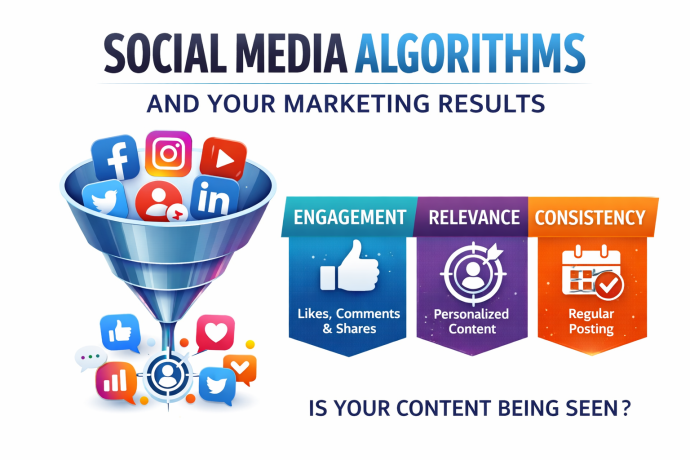
Most social media platforms prioritize similar signals. Engagement plays a major role, including likes, comments, shares, and saves. Content that sparks conversation or keeps users on the platform longer often performs better.

Consistency also matters. Accounts that post regularly and maintain engagement tend to receive more visibility. In addition, platforms favor content formats they want to promote, such as short form video or native features.

Relevance is another major factor. Algorithms analyze user behavior to determine which content matches individual interests. When content aligns with audience intent, reach improves naturally.

How Algorithms Impact Organic Reach

Organic reach has declined across many platforms as competition increases. Algorithms limit visibility to ensure users see high quality, relevant content rather than overwhelming feeds.

This makes it more important for businesses to focus on value driven content instead of promotional messaging. Educational, entertaining, and relatable content typically performs better than direct sales posts.

Adapting Your Marketing Strategy

Successful marketing strategies account for algorithm behavior. Businesses should focus on creating content designed for engagement rather than volume. Posting less frequently but with higher quality often produces better results.

Testing content formats, posting times, and messaging helps identify what resonates. Data from analytics tools provides insights that allow brands to refine their approach and improve performance.

Paid advertising also plays a role. While organic reach is important, paid social campaigns help businesses maintain consistent visibility while supporting algorithm driven strategies.

The Role of Consistency and Quality

Algorithms reward consistency. Brands that maintain a steady presence build familiarity and trust with their audience. High quality visuals, clear messaging, and thoughtful captions increase engagement and visibility.

Quality matters more than ever. Algorithms favor content that keeps users engaged and encourages meaningful interaction.

Long Term Impact on Marketing Results

Understanding algorithms leads to more predictable results. Brands that align content with platform behavior experience improved reach, stronger engagement, and better return on investment.

By staying informed and adaptable, businesses can use social media algorithms to their advantage rather than fighting against them.

Final Thoughts

Social media algorithms shape how content performs. Businesses that understand these systems and adjust strategies accordingly create stronger marketing results and long term growth.

Filed Under: Blogging Tagged With: content visibility, digital marketing strategy, marketing agency, online marketing, social media algorithms, social media marketing

What Is Search Engine Optimization?

January 23, 2026

Table of Contents
  • What Are Social Media Algorithms
  • Why Algorithms Matter for Marketing
  • Key Factors That Influence Algorithm Performance
  • How Algorithms Impact Organic Reach
  • Adapting Your Marketing Strategy
  • The Role of Consistency and Quality
  • Long Term Impact on Marketing Results
  • Final Thoughts
SEO illustration

Introduction

Search engine optimization, commonly known as SEO, is the process of improving a website so it appears more prominently in search engine results. When people search online for products, services, or information, search engines aim to deliver the most relevant and helpful results. SEO helps businesses align their websites with those expectations.

Unlike paid advertising, SEO focuses on long-term visibility. A well-optimized website continues to attract traffic without paying for every click, making SEO a core part of a successful digital marketing strategy.

How Search Engines Work

Search engines use automated programs called crawlers to discover and index web pages. These crawlers analyze content, structure, and signals across the web to determine which pages best match a user’s search query.

Ranking systems consider hundreds of factors, including relevance, authority, user experience, and technical performance. Businesses that invest in technical website optimization and high-quality content give search engines clearer signals to rank their pages higher.

On-Page SEO Explained

On-page SEO focuses on optimizing elements directly on your website. This helps search engines understand what each page is about and how it should rank.

Key on-page SEO components include:

  • Keyword research and placement
  • Page titles and meta descriptions
  • Headings and content structure
  • Internal linking between related pages
  • Image optimization

Strong on-page SEO works best when paired with a clear content marketing strategy that focuses on search intent rather than keyword stuffing.

Technical SEO Fundamentals

Technical SEO ensures search engines can crawl, index, and understand your website efficiently. Even high-quality content struggles to rank if technical issues block access.

Important technical SEO factors include:

  • Website speed and performance
  • Mobile-friendly design
  • Secure HTTPS connections
  • Clean URL structure
  • XML sitemaps and proper indexing

Businesses often combine technical SEO improvements with website design and development services to improve both performance and user experience.

Off-Page SEO and Authority Building

Off-page SEO focuses on building credibility and authority outside your website. Search engines view backlinks from trusted sources as signals of reliability.

Authority grows through:

  • High-quality backlinks
  • Brand mentions
  • Online reviews
  • Local business citations

A strong off-page strategy often overlaps with reputation management and local business marketing efforts.

Local SEO for Location-Based Businesses

Local SEO helps businesses appear in search results tied to a specific geographic area. This is especially important for service providers, retail stores, and professional offices.

Local SEO includes:

  • Optimizing your Google Business Profile
  • Managing customer reviews
  • Creating location-based service pages
  • Ensuring consistent business information across directories

Local SEO pairs well with local advertising strategies to drive both online visibility and in-person traffic.

Why SEO Matters for Businesses

SEO attracts users who are actively searching for solutions, making the traffic highly qualified. This intent-driven audience often converts better than traffic from interruption-based channels.

SEO also builds credibility. Websites that rank higher in search results earn more trust and recognition over time. As part of a broader lead generation strategy, SEO supports sustainable business growth.

SEO Is a Long-Term Strategy

SEO does not deliver instant results. It requires ongoing optimization, content creation, and performance monitoring. However, businesses that commit to SEO benefit from compounding growth.

As rankings improve and authority builds, organic traffic becomes more consistent and cost-effective compared to paid advertising alone.

Conclusion

Search engine optimization helps businesses improve online visibility, attract qualified visitors, and build long-term digital presence. By combining technical optimization, high-quality content, and authority-building strategies, SEO supports nearly every other marketing channel and creates sustainable growth.

Filed Under: Blogging Tagged With: digital marketing strategy, online visibility, organic search, search engine optimization, seo basics, website optimization

Social Media Restrictions in Australia and the Looming Ban in the UK: What Businesses Need to Know

January 21, 2026

Table of Contents
  • What Are Social Media Algorithms
  • Why Algorithms Matter for Marketing
  • Key Factors That Influence Algorithm Performance
  • How Algorithms Impact Organic Reach
  • Adapting Your Marketing Strategy
  • The Role of Consistency and Quality
  • Long Term Impact on Marketing Results
  • Final Thoughts
social media ban

Introduction

Governments around the world are reassessing the role of social media in society. Concerns around data privacy, misinformation, youth safety, and platform accountability have pushed regulation from discussion into action. Australia has already implemented strict measures targeting social media platforms, while the United Kingdom is moving toward stronger enforcement that many describe as a looming ban in certain contexts.

These developments raise important questions for users, businesses, and marketers who rely on social platforms as part of a broader digital marketing strategy.

Australia’s Approach to Social Media Regulation

Australia has taken one of the most assertive stances on social media regulation among Western countries. Rather than banning platforms outright, the government has focused on forcing accountability through legislation.

Key actions include:

  • Laws requiring platforms to pay news publishers for content
  • Increased penalties for failing to remove harmful or misleading material
  • Stronger expectations around user safety, especially for minors

Australia’s strategy shifts responsibility onto platforms rather than individual users. Businesses impacted by these changes have increasingly relied on their own websites and SEO strategies to maintain visibility when social reach fluctuates.

Companies with strong organic search visibility and consistent content publishing were less affected than those relying solely on social distribution.

Effects on Users and Businesses in Australia

For users, the impact has been mixed. Some platforms temporarily restricted news content, while others adjusted how content is shared. These changes caused short-term disruption but did not eliminate social media usage.

Businesses felt a stronger impact. Many relied on social platforms to distribute promotions, updates, and brand messaging. Sudden policy changes forced companies to diversify into content marketing, email marketing, and local SEO to maintain consistent lead flow.

Brands that invested in owning their traffic rather than renting attention through platforms adapted more quickly.

The UK’s Looming Restrictions

The United Kingdom has not enacted a full social media ban, but proposed legislation under its Online Safety framework signals tighter enforcement. Platforms may face heavier penalties and increased moderation requirements if they fail to comply.

For advertisers, this introduces uncertainty around long-term platform reliability. As a result, many businesses are strengthening paid advertising strategies outside of social media, including search ads and display campaigns.

This shift highlights the importance of building multi-channel advertising strategies that do not depend on a single platform.

Why Governments Are Taking Action

Both Australia and the UK cite similar concerns: misinformation, youth mental health, and unchecked platform influence. Regulation offers governments a way to assert oversight of global technology companies operating within their borders.

At the same time, lawmakers must balance public safety with freedom of expression. This tension continues to shape how regulations evolve and how strictly they are enforced.

Implications for Marketing and Advertising

For businesses, these developments reinforce a critical lesson: relying exclusively on social media creates risk.

Forward-thinking companies are investing in:

  • Strong website design and conversion optimization
  • Long-term search engine optimization
  • Email lists and first-party data ownership
  • Paid search and diversified advertising channels

Social media remains valuable, but it works best when supported by a solid digital foundation.

A Balanced Perspective

Supporters of regulation argue it protects users and encourages accountability. Critics warn that overregulation may restrict expression or reduce platform availability.

Both perspectives hold merit. From a business standpoint, the priority is adaptability. Companies that build resilient marketing systems remain effective regardless of platform policy changes.

Conclusion

Australia’s social media regulations and the UK’s proposed restrictions reflect a global shift toward increased oversight of digital platforms. While these measures stop short of full bans, they significantly impact how businesses market, advertise, and communicate online.

Organizations that invest in SEO, owned content, and diversified marketing strategies will remain competitive as the digital landscape continues to change.

Filed Under: Blogging Tagged With: advertising trends, australia social media laws, digital marketing strategy, platform regulation, social media regulation, uk online safety

How to Turn Website Traffic Into Qualified Leads

December 16, 2025

Table of Contents
  • What Are Social Media Algorithms
  • Why Algorithms Matter for Marketing
  • Key Factors That Influence Algorithm Performance
  • How Algorithms Impact Organic Reach
  • Adapting Your Marketing Strategy
  • The Role of Consistency and Quality
  • Long Term Impact on Marketing Results
  • Final Thoughts
Increase Website Traffic with Digital Marketing Strategy: Businessmen Use Digital Technology to Analyze and Improve Performance Steady Growth in an Era Where Technology and Innovation are Key Drivers

Traffic Alone Is Not Enough

Driving traffic to your website is only half the battle. The real value comes from turning visitors into qualified leads who are ready to engage with your business. Many companies struggle because their websites attract visitors but fail to guide them toward action.

Make Your Message Clear

The first step is clarity. Visitors should immediately understand what your business offers and how it solves their problem. Clear headlines, simple navigation, and focused messaging reduce confusion and increase engagement. If users cannot quickly find what they need, they leave.

Use Strong Calls to Action

Calls to action are critical for lead generation. Every page should guide visitors toward a specific next step, whether that is filling out a form, scheduling a consultation, or requesting more information. Calls to action should be visible, direct, and relevant to the content on the page.

Create Conversion Focused Landing Pages

Landing pages play a major role in converting traffic. Instead of sending all visitors to a homepage, targeted campaigns should lead to focused pages designed for one goal. These pages remove distractions and speak directly to user intent, which increases conversion rates.

Build Trust With Website Visitors

Trust signals also influence lead quality. Testimonials, reviews, certifications, and clear contact information help visitors feel confident before reaching out. Qualified leads are more likely to convert when they trust the business behind the website.

Optimize for Speed and Mobile

Website speed and mobile optimization matter more than ever. Slow loading pages and poor mobile experiences drive visitors away. Optimizing performance ensures potential leads stay engaged long enough to take action.

Track and Improve Performance

Finally, tracking and optimization are essential. Analytics help identify which pages convert and which need improvement. Small changes in layout, copy, or form design can significantly impact lead quality over time.

Conclusion

Turning website traffic into qualified leads requires intention and ongoing refinement. When done correctly, your website becomes a reliable source of business growth rather than just an online brochure.

Filed Under: Blogging Tagged With: digital marketing strategy, lead generation, marketing agency, marketing optimization, qualified leads, website conversion

Why Consistent Branding Builds Customer Trust

November 4, 2025

Table of Contents
  • What Are Social Media Algorithms
  • Why Algorithms Matter for Marketing
  • Key Factors That Influence Algorithm Performance
  • How Algorithms Impact Organic Reach
  • Adapting Your Marketing Strategy
  • The Role of Consistency and Quality
  • Long Term Impact on Marketing Results
  • Final Thoughts
Brand Building, business marketing motivational inspirational quotes, words typography lettering concept

Introduction

In today’s competitive digital landscape, your brand is your identity. Whether customers discover you through social media, a Google search, or a paid ad, they expect your message and design to feel the same everywhere. Consistent branding isn’t just about visuals, it’s about creating a unified experience that builds familiarity, trust, and loyalty.

Why Brand Consistency Matters

When your branding feels cohesive, people immediately recognize and trust you. Inconsistent messaging, colors, or tone can confuse potential customers and cause them to lose confidence in your business.

Think about major brands like Apple or Nike, their messages are unmistakable because they maintain consistency across every channel. That same principle applies to businesses of all sizes.

Key Benefits of Consistent Branding

  1. Brand Recognition: Consistent imagery and messaging make your brand easy to identify.
  2. Customer Trust: A unified presence demonstrates reliability and professionalism.
  3. Loyalty & Retention: Familiarity makes customers feel more connected to your brand.
  4. Marketing Efficiency: Clear guidelines make content creation faster and more effective.

How to Keep Your Branding Consistent

  • Develop a Brand Style Guide: Define your logo use, color palette, typography, and tone of voice.
  • Unify Your Messaging: Your website, ads, and social posts should share the same tone and goals.
  • Audit Regularly: Review your visuals and messaging every few months to maintain alignment.
  • Empower Your Team: Ensure everyone representing your business understands your brand values.

Final Thoughts

Consistency builds trust, and trust builds sales. When your customers have the same great experience across all platforms, they’ll remember your business and return again and again.

OMA Comp Tip:

Looking to strengthen your brand identity? OMA Comp offers brand strategy, web design, and digital marketing solutions that help you create a lasting impression.

Contact us today at (248) 616-3057 or visit www.omacomp.com.

Schedule Consultation

Filed Under: Blogging Tagged With: brand consistency, digital marketing strategy, OMA Comp, online marketing, social media

Footer

Contact Information


OMA Comp

318 Woodlawn Avenue
Royal Oak, MI 48073-2615

Phone: 248-616-3057
Fax: 248-232-0075

Review Us | Request A Quote

Contact Us

Recent Posts

  • How Social Media Algorithms Impact Your Marketing Results
  • The Role of AI in Marketing Analytics: Turning Data Into Smarter Decisions
  • How Nostalgia-Driven Marketing Is Reconnecting Brands and Audiences
  • What Is AI Bias?
  • Advertising Inside AI Assistants: Are Brands Ready for the Shift?

Newsletter Signup

Subscribe below to hear about our latest product offerings and promotions.

Subscribe

Connect With Us

  • facebook
  • instagram
  • linkedin
  • yelp
  • x
  • youtube

Copyright © 2026 OMA Comp · Repair Policies · Terms and Conditions · Privacy Policy · Service Ticket

  • Phone: (248) 616-3057
  • Review Us
  • Newsletter Sign Up
Accessibility Adjustments

Powered by OneTap

How long do you want to hide the toolbar?
Hide Toolbar Duration
Select your accessibility profile
Vision Impaired Mode
Enhances website's visuals
Seizure Safe Profile
Clear flashes & reduces color
ADHD Friendly Mode
Focused browsing, distraction-free
Blindness Mode
Reduces distractions, improves focus
Epilepsy Safe Mode
Dims colors and stops blinking
Content Modules
Font Size

Default

Line Height

Default

Color Modules
Orientation Modules