• Skip to primary navigation
  • Skip to main content
  • Skip to footer
OMA Comp

OMA Comp

Web Design & Development

  • Home
  • About
    • Our Culture
    • Client Testimonials
    • Photo Gallery
    • Video Testimonials
  • Services
    • Web & Creative
      • Custom App Design
      • Drone Services
      • Graphic Design
      • Logo Design
      • Online Stores
      • Photography/Videography
      • Video Production
      • Web Design/Development
    • Digital Marketing
      • Advertising & Paid Search (PPC)
      • B2B Marketing
      • Content Marketing
      • Email Marketing
      • Press Releases & Public Relations
      • Social Media Management
    • SEO & Online Visibility
      • Local SEO
      • Reputation Management & Repair
      • Search Engine Optimization (SEO)
      • Website Compliance (ADA, WCAG)
    • Technology & IT Solutions
      • Cloud Solutions
      • Custom Integrations
      • IT Support & Maintenance
      • Network Setup & Security
      • Managed Hosting
    • Strategy & Consulting
      • Analytics & Reporting
      • Marketing Strategy Development
      • Training & Support
      • Website & Brand Review
      • Social Media Boot Camp Classes
      • Events
  • Portfolio
  • Blog
  • Contact
    • Website Design Form
    • Careers
    • Internships
    • Review Us
  • Online Bill Pay
  • Request a Quote
  • 248-616-3057

online marketing

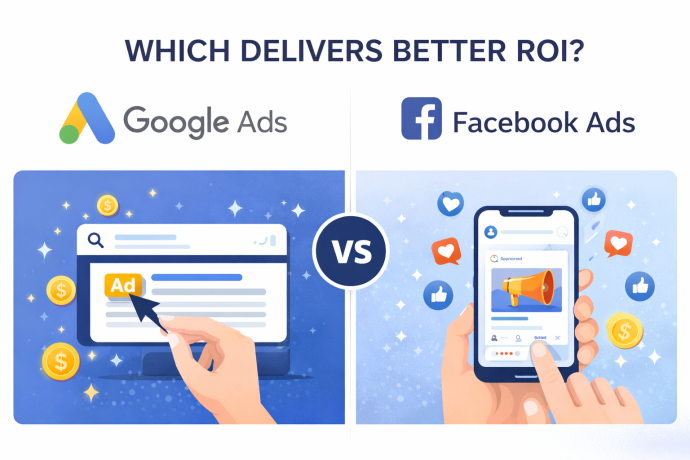
Google Ads vs Facebook Ads: Which Delivers Better ROI

February 13, 2026

Table of Contents
  • Understanding the Difference Between Google Ads and Facebook Ads
  • How Google Ads Generates ROI
  • How Facebook Ads Generates ROI
  • Comparing Conversion Intent
  • Cost and Budget Considerations
  • The Best Strategy: Integration
  • Final Thoughts

Understanding the Difference Between Google Ads and Facebook Ads

When businesses invest in paid advertising, one of the most common questions is whether Google Ads or Facebook Ads delivers better ROI. Both platforms offer powerful tools, but they work differently and serve different purposes within a marketing strategy. Google Ads focuses on search intent. Users actively search for products or services, making it a demand capture platform. Facebook Ads focuses on audience targeting and interest based advertising, making it more of a demand generation platform. Understanding this difference is essential when evaluating return on investment.

How Google Ads Generates ROI

Google Ads allows businesses to appear at the top of search results when users type in specific keywords. This means your ads reach people who are already looking for what you offer. Because of this high intent behavior, Google Ads often delivers strong conversion rates. If someone searches for services like digital marketing agency near me or website design services, they are closer to making a decision. However, competition can increase cost per click. Success depends on keyword strategy, optimized ad copy, strong landing pages, and effective bid management. When properly managed, Google Ads produces measurable and predictable results.

How Facebook Ads Generates ROI

Facebook Ads targets users based on demographics, interests, and online behavior. Users are not actively searching when they see your ad. Instead, your message appears based on audience targeting. This makes Facebook Ads ideal for brand awareness and audience building. It often delivers lower cost per click and flexible budgeting. However, conversions depend heavily on strong creative, compelling messaging, and retargeting strategies. Facebook Ads works best when nurturing potential customers over time.

Comparing Conversion Intent

The biggest difference between Google Ads and Facebook Ads is intent. Google Ads captures existing demand. Users search with purpose, which often leads to quicker conversions. Facebook Ads creates demand by introducing your brand to new audiences. This may result in longer buying cycles but stronger brand visibility. If your goal is immediate lead generation, Google Ads may provide faster ROI. If your goal is awareness and audience growth, Facebook Ads can be highly effective.

Cost and Budget Considerations

Google Ads often has higher cost per click due to competition. However, high intent traffic can justify the investment. Facebook Ads typically offers lower cost per click and allows businesses to test multiple audiences and creatives. The platform you choose should align with your marketing goals and budget strategy.

The Best Strategy: Integration

Many businesses see the strongest ROI when combining both platforms. Google Ads captures high intent traffic, while Facebook Ads nurtures and retargets users who have already interacted with your brand. An integrated strategy creates multiple touchpoints and increases conversion potential. Someone may discover your brand through Facebook, then later search for you on Google before converting.

Final Thoughts

There is no universal answer to which platform delivers better ROI. The best choice depends on your goals, industry, and audience. Businesses focused on immediate conversions often benefit from Google Ads. Companies seeking long term growth may prioritize Facebook Ads. In many cases, combining both platforms produces the most effective results and sustainable marketing performance.

Filed Under: Blogging Tagged With: digital marketing ROI, Facebook Ads, Google Ads, online marketing, paid advertising strategy, PPC advertising, social media advertising

How Social Media Algorithms Impact Your Marketing Results

February 9, 2026

Table of Contents
  • Understanding the Difference Between Google Ads and Facebook Ads
  • How Google Ads Generates ROI
  • How Facebook Ads Generates ROI
  • Comparing Conversion Intent
  • Cost and Budget Considerations
  • The Best Strategy: Integration
  • Final Thoughts

What Are Social Media Algorithms

Social media algorithms are systems that determine which content users see in their feeds. Platforms like Facebook, Instagram, LinkedIn, and TikTok use algorithms to prioritize content based on relevance, engagement, and user behavior. Instead of showing posts in chronological order, platforms display content they believe users will find most valuable.

Understanding how these algorithms work helps businesses create content that reaches the right audience more consistently.

Why Algorithms Matter for Marketing

Algorithms directly influence how many people see your content. Even with a strong following, posts may reach only a portion of your audience if they do not align with platform preferences. This means marketing success depends not just on what you post, but how and when you post it.

For businesses, algorithm changes can affect brand visibility, engagement rates, and lead generation. Brands that adapt quickly maintain stronger performance over time.

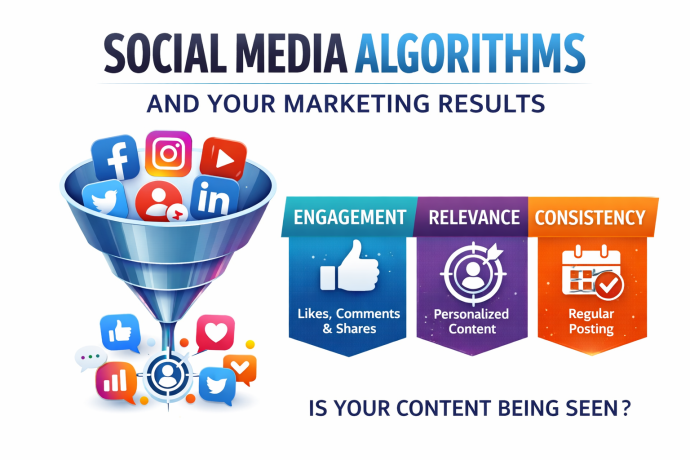
Key Factors That Influence Algorithm Performance

Most social media platforms prioritize similar signals. Engagement plays a major role, including likes, comments, shares, and saves. Content that sparks conversation or keeps users on the platform longer often performs better.

Consistency also matters. Accounts that post regularly and maintain engagement tend to receive more visibility. In addition, platforms favor content formats they want to promote, such as short form video or native features.

Relevance is another major factor. Algorithms analyze user behavior to determine which content matches individual interests. When content aligns with audience intent, reach improves naturally.

How Algorithms Impact Organic Reach

Organic reach has declined across many platforms as competition increases. Algorithms limit visibility to ensure users see high quality, relevant content rather than overwhelming feeds.

This makes it more important for businesses to focus on value driven content instead of promotional messaging. Educational, entertaining, and relatable content typically performs better than direct sales posts.

Adapting Your Marketing Strategy

Successful marketing strategies account for algorithm behavior. Businesses should focus on creating content designed for engagement rather than volume. Posting less frequently but with higher quality often produces better results.

Testing content formats, posting times, and messaging helps identify what resonates. Data from analytics tools provides insights that allow brands to refine their approach and improve performance.

Paid advertising also plays a role. While organic reach is important, paid social campaigns help businesses maintain consistent visibility while supporting algorithm driven strategies.

The Role of Consistency and Quality

Algorithms reward consistency. Brands that maintain a steady presence build familiarity and trust with their audience. High quality visuals, clear messaging, and thoughtful captions increase engagement and visibility.

Quality matters more than ever. Algorithms favor content that keeps users engaged and encourages meaningful interaction.

Long Term Impact on Marketing Results

Understanding algorithms leads to more predictable results. Brands that align content with platform behavior experience improved reach, stronger engagement, and better return on investment.

By staying informed and adaptable, businesses can use social media algorithms to their advantage rather than fighting against them.

Final Thoughts

Social media algorithms shape how content performs. Businesses that understand these systems and adjust strategies accordingly create stronger marketing results and long term growth.

Filed Under: Blogging Tagged With: content visibility, digital marketing strategy, marketing agency, online marketing, social media algorithms, social media marketing

What Is the Best AI to Help With Your Business?

January 16, 2026

Table of Contents
  • Understanding the Difference Between Google Ads and Facebook Ads
  • How Google Ads Generates ROI
  • How Facebook Ads Generates ROI
  • Comparing Conversion Intent
  • Cost and Budget Considerations
  • The Best Strategy: Integration
  • Final Thoughts

Introduction

Artificial intelligence has quickly become a practical business tool rather than a future concept. From marketing and customer support to internal operations and decision-making, AI platforms help businesses save time, reduce costs, and improve consistency. With several major tools available, many business owners ask the same question: which AI is best for business use?

Three of the most widely used platforms today are ChatGPT, Claude, and Gemini. Each offers strengths that appeal to different business needs. Understanding how they compare helps you choose the right tool or combination of tools for your workflow.

What Businesses Should Look for in an AI Tool

Before comparing platforms, it is important to define what makes an AI useful for business. The most effective tools support productivity, adapt to real-world use cases, and integrate smoothly into daily operations.

Key factors to consider include:

  • Content quality and clarity
  • Ability to follow instructions accurately
  • Speed and reliability
  • Data handling and analysis
  • Ease of use for non-technical teams
  • Flexibility across departments

No single AI excels at everything, but some perform better depending on the task.

ChatGPT for Business Use

ChatGPT is widely used across industries because of its flexibility and strong performance in content creation and problem-solving. Businesses use it for marketing copy, blog writing, customer responses, brainstorming, coding support, and workflow planning.

One of ChatGPT’s strengths is instruction-following. It handles detailed prompts well and adapts tone, format, and structure based on user input. This makes it especially valuable for marketing teams, consultants, and business owners who need consistent messaging.

ChatGPT also supports automation workflows, integrations, and advanced reasoning, which helps businesses scale tasks like lead nurturing, reporting, and internal documentation.

Claude for Business Use

Claude focuses heavily on clarity, safety, and long-form reasoning. Many businesses prefer Claude for internal documentation, policy writing, summaries, and research-heavy tasks.

Claude performs well when handling large documents or reviewing complex information. It often produces thoughtful, measured responses and avoids overly promotional language, which can be useful for compliance-driven industries.

However, Claude can be more conservative in its responses and may require additional prompting for creative or sales-focused tasks. Businesses that prioritize structure and accuracy often benefit most from Claude.

Gemini for Business Use

Gemini, developed by Google, integrates closely with Google Workspace tools like Docs, Sheets, and Gmail. This makes it appealing for businesses already embedded in the Google ecosystem.

Gemini performs well with data analysis, search-based tasks, and information retrieval. It helps teams summarize documents, analyze spreadsheets, and assist with productivity inside familiar platforms.

While Gemini continues to improve in creative output, businesses typically find it strongest for operational tasks rather than marketing-driven content or nuanced brand messaging.

Comparing Strengths Side by Side

Each platform serves a different purpose:

  • ChatGPT excels in marketing, strategy, automation, and creative tasks
  • Claude shines in research, documentation, and long-form analysis
  • Gemini supports productivity, data analysis, and Google-based workflows

Many businesses benefit from using more than one tool, depending on department needs.

Which AI Is Best for Your Business?

The best AI depends on how your business operates. Marketing-focused companies often choose ChatGPT for its adaptability and content quality. Organizations that manage complex documentation may prefer Claude. Teams working heavily inside Google tools may lean toward Gemini.

Rather than choosing based on popularity alone, businesses should evaluate where time is lost, where consistency is needed, and which tasks can be automated or supported by AI.

Conclusion

AI tools have become essential for modern businesses, but no single platform fits every need. ChatGPT, Claude, and Gemini each offer unique strengths that support different workflows. By understanding how each tool performs, businesses can make smarter decisions, improve efficiency, and gain a competitive advantage through AI-powered support.

Filed Under: Blogging Tagged With: ai tools comparison, artificial intelligence for business, business automation, chatgpt for business, claude ai, google gemini ai, marketing ai, OMA Comp, online marketing, productivity technology

Exploring the New Apple iOS: Key Features, Improvements, and What Users Should Know

November 19, 2025

Table of Contents
  • Understanding the Difference Between Google Ads and Facebook Ads
  • How Google Ads Generates ROI
  • How Facebook Ads Generates ROI
  • Comparing Conversion Intent
  • Cost and Budget Considerations
  • The Best Strategy: Integration
  • Final Thoughts

Apple has officially released its latest iOS update, and it comes packed with powerful new features, performance upgrades, and enhanced tools designed to improve the way users interact with their iPhones. As Apple continues shaping the future of mobile technology, this new iOS version puts a strong focus on customization, productivity, privacy, and overall performance.

Expanded Customization Options

One of the most notable improvements in the new Apple iOS is its deeper customization capabilities. Users now have greater control over their Home Screen and Lock Screen, including access to new widget designs, dynamic data displays, and flexible layout options. Apple has expanded font choices, photo styles, and interactive widget features, giving iPhone users the ability to tailor their device more than ever before.

Upgraded Messaging and Communication Tools

The Messages app receives significant enhancements in this update. Improved search filters help users quickly locate conversations, photos, and shared content. Updated sticker tools, message editing options, and better organization features make communication smoother and more intuitive. FaceTime also benefits from stability improvements and higher-quality video performance.

Productivity Tools Receive Major Improvements

Notes, Reminders, and Mail see meaningful upgrades designed to boost productivity. Notes and Reminders now support better categorization, smart lists, and advanced collaboration tools. Mail features improved search accuracy, scheduled sending, and follow-up prompts to help users stay organized and connected.

Stronger Privacy and Security Protections

Apple continues to strengthen its reputation for privacy with enhanced protections built into this version of iOS. Users gain expanded app-level privacy controls, clearer permission alerts, improved tracking transparency, and increased on-device processing for sensitive data. These features give users more control and visibility over how their information is used.


Better Performance Across All Devices

The latest iOS update prioritizes performance, offering faster app launches, smoother animations, and optimized system responsiveness. Battery life is improved through smarter background activity management. Older iPhones, in particular, benefit from these refinements, experiencing smoother performance without needing a hardware upgrade.

Enhanced Integration Across the Apple Ecosystem

Apple has further optimized how devices work together within its ecosystem. The new iOS improves continuity features, allowing tasks to be shared more seamlessly between iPhone, iPad, Mac, Apple Watch, and AirPods. Notifications, calls, and app activities transition more smoothly between devices, reinforcing the unified Apple experience.

Accessibility Upgrades for Inclusive Use

Accessibility remains a key priority in Apple’s software design. This update includes expanded screen reader tools, refined voice control capabilities, and improved visual assistance features. These enhancements ensure the iPhone remains accessible and functional for users of all abilities.

Conclusion

The latest Apple iOS update delivers a strong combination of customization, speed, security, and productivity enhancements. With expanded personalization tools, improved communication features, deeper privacy protections, and better overall performance, this update stands out as one of Apple’s most user-focused releases yet.

Filed Under: Blogging Tagged With: Apple, ios 26, OMA Comp, online marketing, seo, social media, Technology, website design, website development

Boost Your Ad Performance with A/B Testing

November 6, 2025

Table of Contents
  • Understanding the Difference Between Google Ads and Facebook Ads
  • How Google Ads Generates ROI
  • How Facebook Ads Generates ROI
  • Comparing Conversion Intent
  • Cost and Budget Considerations
  • The Best Strategy: Integration
  • Final Thoughts
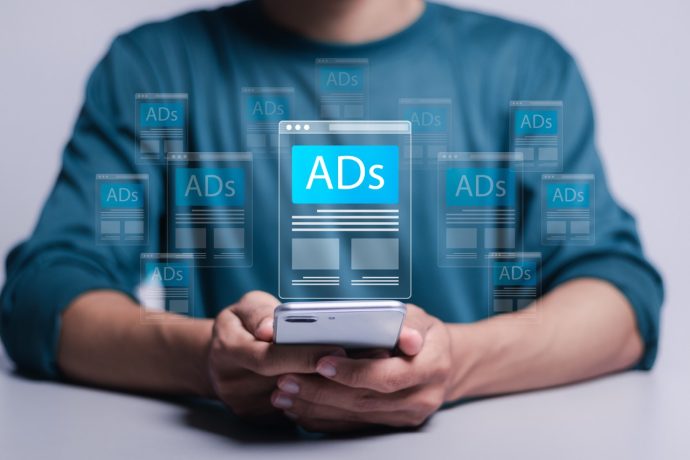
Digital marketing and online advertising to targeted customers. Shooting ads on cross feeds to optimize customer engagement. Person using mobile smartphone with virtual screen of ADs on website.

Introduction

Digital advertising can be unpredictable, what works for one audience might not for another. The smartest marketers rely on data, not guesses. A/B testing is the key to unlocking better performance and higher ROI by comparing two ad variations to see which performs best.

What Is A/B Testing?

A/B testing (or split testing) involves running two versions of an ad that differ by only one element — such as a headline, image, or call-to-action. The version that performs better gives you insights into what resonates most with your audience.

Learn More About Our Ads

Example:

  • Ad A: “Grow Your Business with Expert Marketing”
  • Ad B: “Ready to Boost Sales? Partner with OMA Comp”

The ad with higher clicks or conversions reveals what motivates your audience to act.

Why It’s Essential

  1. Improves ROI: Small tweaks can make a big difference in performance.
  2. Eliminates Guesswork: Data-driven insights lead to better decision-making.
  3. Optimizes User Experience: Discover what visuals and messaging appeal to your audience.
  4. Guides Future Campaigns: Use test results to strengthen every campaign you launch.

How to Run an Effective A/B Test

  • Change One Variable at a Time: Focus on one element, headline, color, or image.
  • Set Clear Goals: Determine whether you’re measuring clicks, leads, or sales.
  • Run for a Meaningful Duration: Allow enough time to collect reliable data.
  • Analyze and Apply: Use what you learn to improve future ads.

Elements Worth Testing

  • Headline or ad copy
  • Images or video formats
  • Call-to-action text
  • Landing page layout
  • Audience demographics

Final Thoughts

A/B testing turns marketing into measurable science. With each test, you learn what truly connects with your audience, helping you spend smarter and achieve stronger results.

OMA Comp Tip:

At OMA Comp, we help businesses analyze ad performance, run A/B tests, and optimize campaigns to achieve maximum ROI.

Start improving your ads today, call (248) 616-3057 or visit www.omacomp.com.

Lets Get Started

Filed Under: Blogging Tagged With: A/B testing, ad performance, Best in Detroit, Detroit, OMA Comp, online advertising, online marketing, Services, Top Detroit Marketing Compnay

Boost Sales through Social Media Engagement

November 5, 2025

Table of Contents
  • Understanding the Difference Between Google Ads and Facebook Ads
  • How Google Ads Generates ROI
  • How Facebook Ads Generates ROI
  • Comparing Conversion Intent
  • Cost and Budget Considerations
  • The Best Strategy: Integration
  • Final Thoughts
Social media. Man holding smartphone, connecting to internet and chatting

Introduction

A large social media following looks great — but if those followers don’t become customers, you’re missing real growth opportunities. The key to success lies in nurturing your audience, providing value, and guiding them toward action.

Key Factors

1. Build Trust First

Trust is the foundation of every sale. Show your authenticity by sharing behind-the-scenes posts, client success stories, and educational content. When your audience feels connected to your brand, they’re more likely to buy from you.

2. Provide Real Value

Your followers don’t just want to be sold to — they want solutions.
Offer helpful content such as:

  • Industry insights or tutorials
  • Customer testimonials
  • Tips and advice related to your services

By solving problems through your posts, you establish authority and credibility.

3. Use Clear Calls-to-Action (CTAs)

Never leave your audience guessing about what to do next.
Use action-driven language like:

  • “Book a free consultation”
  • “Visit our website to learn more”
  • “Claim your offer today”

Simple, direct CTAs guide followers toward conversion.

4. Offer Exclusive Social Media Deals

Reward your followers with limited-time offers or early access to new products. This creates excitement and gives people a reason to act fast.

5. Engage Authentically

Engagement builds relationships. Respond to comments, thank your followers, and participate in conversations. A responsive brand feels human — and humans build trust.

Final Thoughts

Turning followers into customers takes consistency, strategy, and genuine connection. Focus on adding value first, and conversions will naturally follow.

OMA Comp Tip:

Want to grow your business through social media? OMA Comp specializes in social media marketing, content creation, and ad management to help you turn engagement into sales.

Call us at (248) 616-3057 or visit www.omacomp.com.

Start Converting Today

Filed Under: Blogging Tagged With: converting followers, Digital Marketing, OMA Comp, online marketing, social media, social media strategy

  • Page 1
  • Page 2
  • Page 3
  • Interim pages omitted …
  • Page 16
  • Go to Next Page »

Footer

Contact Information


OMA Comp

318 Woodlawn Avenue
Royal Oak, MI 48073-2615

Phone: 248-616-3057
Fax: 248-232-0075

Review Us | Request A Quote

Contact Us

Recent Posts

  • LinkedIn Algorithm Changes for B2B Brands
  • The Power of Video in Healthcare Marketing in Royal Oak
  • What Is Marketing and Why It Matters for Royal Oak Businesses
  • Why Influencer Marketing Is So Important Today
  • Leveraging Short Form Video for Seasonal Promotions

Newsletter Signup

Subscribe below to hear about our latest product offerings and promotions.

Subscribe

Connect With Us

  • Facebook
  • Instagram
  • LinkedIn
  • Twitter
  • YouTube

Copyright © 2026 OMA Comp · Repair Policies · Terms and Conditions · Privacy Policy · Service Ticket

  • Phone: (248) 616-3057
  • Review Us
  • Newsletter Sign Up
Accessibility Adjustments

Powered by OneTap

How long do you want to hide the toolbar?
Hide Toolbar Duration
Select your accessibility profile
Vision Impaired Mode
Enhances website's visuals
Seizure Safe Profile
Clear flashes & reduces color
ADHD Friendly Mode
Focused browsing, distraction-free
Blindness Mode
Reduces distractions, improves focus
Epilepsy Safe Mode
Dims colors and stops blinking
Content Modules
Font Size

Default

Line Height

Default

Color Modules
Orientation Modules