• Skip to primary navigation
  • Skip to main content
  • Skip to footer
OMA Comp

OMA Comp

Web Design & Development

  • Home
  • About
    • Our Culture
    • Client Testimonials
    • Photo Gallery
    • Video Testimonials
  • Services
    • Web & Creative
      • Custom App Design
      • Drone Services
      • Graphic Design
      • Logo Design
      • Online Stores
      • Photography/Videography
      • Video Production
      • Web Design/Development
    • Digital Marketing
      • Advertising & Paid Search (PPC)
      • B2B Marketing
      • Content Marketing
      • Email Marketing
      • Press Releases & Public Relations
      • Social Media Management
    • SEO & Online Visibility
      • Local SEO
      • Reputation Management & Repair
      • Search Engine Optimization (SEO)
      • Website Compliance (ADA, WCAG)
    • Technology & IT Solutions
      • Cloud Solutions
      • Custom Integrations
      • IT Support & Maintenance
      • Network Setup & Security
      • Managed Hosting
    • Strategy & Consulting
      • Analytics & Reporting
      • Marketing Strategy Development
      • Training & Support
      • Website & Brand Review
      • Social Media Boot Camp Classes
      • Events
  • Portfolio
  • Blog
  • Contact
    • Website Design Form
    • Careers
    • Internships
    • Review Us
  • Online Bill Pay
  • Request a Quote
  • 248-616-3057

marketing agency

Conversion Rate Optimization Techniques That Deliver Results

February 11, 2026

Table of Contents
  • What Is Conversion Rate Optimization
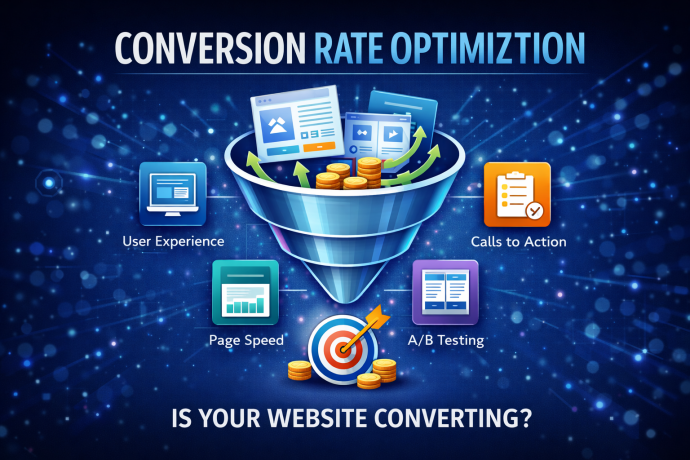
  • Optimize Your Website for User Experience
  • Strengthen Your Calls to Action
  • Improve Page Load Speed
  • Use Data to Guide Decisions
  • Build Trust With Social Proof
  • Simplify Forms and Checkout Processes
  • Test and Refine Continuously
  • Why CRO Delivers Long Term Results
  • Final Thoughts

What Is Conversion Rate Optimization

Conversion rate optimization, often called CRO, focuses on improving the percentage of website visitors who take a desired action. That action may include filling out a form, making a purchase, scheduling a consultation, or signing up for a newsletter.

Instead of spending more money to drive traffic, businesses use CRO techniques to get better results from the traffic they already have. This approach increases efficiency and improves overall marketing return on investment.

Optimize Your Website for User Experience

User experience plays a major role in website conversions. If visitors cannot navigate your site easily, they will leave before taking action.

Start by simplifying navigation. Make sure menus are clear and pages load quickly. Reduce clutter and eliminate unnecessary distractions. A clean layout with strong headlines and clear calls to action helps guide visitors naturally toward conversion.

Mobile optimization is equally important. With most users browsing on smartphones, responsive design ensures your website performs well on every device.

Strengthen Your Calls to Action

Calls to action influence conversion rates more than most businesses realize. Clear, direct language works best. Instead of vague phrases, use action focused wording such as Schedule Your Consultation or Get Your Free Quote.

Placement also matters. Position calls to action above the fold, within content, and at the end of pages. Testing button color, size, and wording can significantly improve click through rates.

Improve Page Load Speed

Website speed directly affects conversion rate optimization. Slow loading pages increase bounce rates and reduce trust.

Optimize images, reduce unnecessary plugins, and use reliable hosting. Even a one second improvement in load time can increase conversions and improve search engine rankings.

Use Data to Guide Decisions

Successful CRO strategies rely on data. Use tools like Google Analytics and heat mapping software to understand how visitors interact with your site.

Identify where users drop off and which pages convert best. A data driven approach removes guesswork and allows you to test changes systematically.

Build Trust With Social Proof

Trust influences purchasing decisions. Adding testimonials, reviews, certifications, and case studies increases credibility.

Place social proof near calls to action to reinforce confidence. When visitors see evidence that others trust your business, they feel more comfortable converting.

Simplify Forms and Checkout Processes

Long or complicated forms discourage conversions. Only ask for essential information. Shorter forms typically generate more leads.

For e commerce websites, streamline the checkout process. Reduce required steps and clearly communicate security measures to build trust.

Test and Refine Continuously

Conversion rate optimization is not a one time project. It requires ongoing testing and refinement.

Run A B tests on headlines, images, layouts, and calls to action. Small changes often lead to measurable improvements over time. Continuous optimization helps businesses stay competitive in evolving markets.

Why CRO Delivers Long Term Results

CRO increases revenue without increasing advertising costs. By improving conversion rates, businesses maximize existing traffic and improve marketing performance.

Instead of chasing more visitors, smart companies focus on converting the audience they already attract.

Final Thoughts

Conversion rate optimization techniques deliver results because they focus on performance, clarity, and user experience. Businesses that invest in CRO create websites that work harder, convert better, and drive measurable growth.
Filed Under: Blogging Tagged With: conversion rate optimization, CRO strategies, digital marketing strategy, lead generation, marketing agency, website conversions

How Social Media Algorithms Impact Your Marketing Results

February 9, 2026

Table of Contents
  • What Is Conversion Rate Optimization
  • Optimize Your Website for User Experience
  • Strengthen Your Calls to Action
  • Improve Page Load Speed
  • Use Data to Guide Decisions
  • Build Trust With Social Proof
  • Simplify Forms and Checkout Processes
  • Test and Refine Continuously
  • Why CRO Delivers Long Term Results
  • Final Thoughts

What Are Social Media Algorithms

Social media algorithms are systems that determine which content users see in their feeds. Platforms like Facebook, Instagram, LinkedIn, and TikTok use algorithms to prioritize content based on relevance, engagement, and user behavior. Instead of showing posts in chronological order, platforms display content they believe users will find most valuable.

Understanding how these algorithms work helps businesses create content that reaches the right audience more consistently.

Why Algorithms Matter for Marketing

Algorithms directly influence how many people see your content. Even with a strong following, posts may reach only a portion of your audience if they do not align with platform preferences. This means marketing success depends not just on what you post, but how and when you post it.

For businesses, algorithm changes can affect brand visibility, engagement rates, and lead generation. Brands that adapt quickly maintain stronger performance over time.

Key Factors That Influence Algorithm Performance

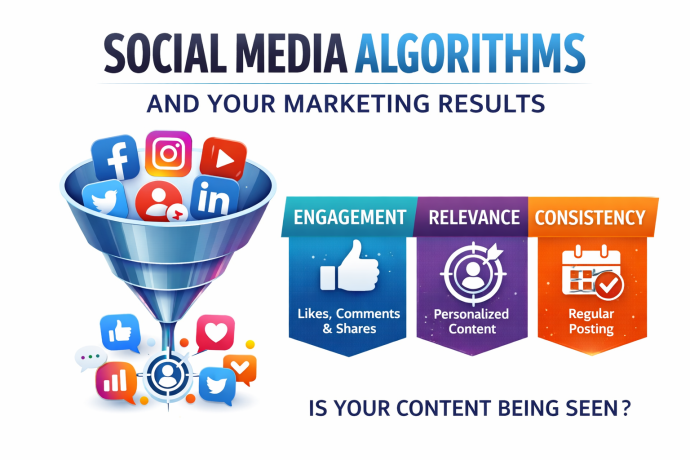
Most social media platforms prioritize similar signals. Engagement plays a major role, including likes, comments, shares, and saves. Content that sparks conversation or keeps users on the platform longer often performs better.

Consistency also matters. Accounts that post regularly and maintain engagement tend to receive more visibility. In addition, platforms favor content formats they want to promote, such as short form video or native features.

Relevance is another major factor. Algorithms analyze user behavior to determine which content matches individual interests. When content aligns with audience intent, reach improves naturally.

How Algorithms Impact Organic Reach

Organic reach has declined across many platforms as competition increases. Algorithms limit visibility to ensure users see high quality, relevant content rather than overwhelming feeds.

This makes it more important for businesses to focus on value driven content instead of promotional messaging. Educational, entertaining, and relatable content typically performs better than direct sales posts.

Adapting Your Marketing Strategy

Successful marketing strategies account for algorithm behavior. Businesses should focus on creating content designed for engagement rather than volume. Posting less frequently but with higher quality often produces better results.

Testing content formats, posting times, and messaging helps identify what resonates. Data from analytics tools provides insights that allow brands to refine their approach and improve performance.

Paid advertising also plays a role. While organic reach is important, paid social campaigns help businesses maintain consistent visibility while supporting algorithm driven strategies.

The Role of Consistency and Quality

Algorithms reward consistency. Brands that maintain a steady presence build familiarity and trust with their audience. High quality visuals, clear messaging, and thoughtful captions increase engagement and visibility.

Quality matters more than ever. Algorithms favor content that keeps users engaged and encourages meaningful interaction.

Long Term Impact on Marketing Results

Understanding algorithms leads to more predictable results. Brands that align content with platform behavior experience improved reach, stronger engagement, and better return on investment.

By staying informed and adaptable, businesses can use social media algorithms to their advantage rather than fighting against them.

Final Thoughts

Social media algorithms shape how content performs. Businesses that understand these systems and adjust strategies accordingly create stronger marketing results and long term growth.

Filed Under: Blogging Tagged With: content visibility, digital marketing strategy, marketing agency, online marketing, social media algorithms, social media marketing

How Local Businesses Can Compete With National Brands

December 18, 2025

Table of Contents
  • What Is Conversion Rate Optimization
  • Optimize Your Website for User Experience
  • Strengthen Your Calls to Action
  • Improve Page Load Speed
  • Use Data to Guide Decisions
  • Build Trust With Social Proof
  • Simplify Forms and Checkout Processes
  • Test and Refine Continuously
  • Why CRO Delivers Long Term Results
  • Final Thoughts

Size Is Not the Deciding Factor

Competing with national brands can feel overwhelming for local businesses, but size is not the deciding factor. With the right marketing strategy, local businesses can stand out and attract loyal customers.

Leverage Local Connection

One of the biggest advantages local businesses have is connection. National brands often lack personalization, while local companies can build real relationships. Highlighting community involvement, local expertise, and personalized service creates trust that large brands struggle to replicate.

Invest in Local SEO

Local SEO is a powerful tool. Optimizing for local search terms, maintaining accurate listings, and encouraging customer reviews help local businesses appear in searches where buying intent is high. When customers search locally, relevance often outweighs brand size.

Use Content to Build Authority

Content marketing allows local businesses to showcase expertise. Blogs, guides, and educational content tailored to local needs help attract organic traffic and position the business as a trusted authority.

Engage Through Social Media

Social media provides another opportunity to compete. Authentic content, behind the scenes posts, and community focused messaging help local brands feel relatable and accessible. Engagement often matters more than follower count.

Maintain Professional Branding

Consistent branding across digital and print materials reinforces credibility. When customers see a polished, professional brand, it levels the playing field against national competitors.

Compete Through Strategy

Local businesses that focus on strategy rather than scale can compete effectively. By leveraging relationships, visibility, and consistency, they can attract customers who value trust, service, and authenticity.

Filed Under: Blogging Tagged With: brand competition, Digital Marketing, local business marketing, local SEO, marketing agency, small business growth

How to Turn Website Traffic Into Qualified Leads

December 16, 2025

Table of Contents
  • What Is Conversion Rate Optimization
  • Optimize Your Website for User Experience
  • Strengthen Your Calls to Action
  • Improve Page Load Speed
  • Use Data to Guide Decisions
  • Build Trust With Social Proof
  • Simplify Forms and Checkout Processes
  • Test and Refine Continuously
  • Why CRO Delivers Long Term Results
  • Final Thoughts
Increase Website Traffic with Digital Marketing Strategy: Businessmen Use Digital Technology to Analyze and Improve Performance Steady Growth in an Era Where Technology and Innovation are Key Drivers

Traffic Alone Is Not Enough

Driving traffic to your website is only half the battle. The real value comes from turning visitors into qualified leads who are ready to engage with your business. Many companies struggle because their websites attract visitors but fail to guide them toward action.

Make Your Message Clear

The first step is clarity. Visitors should immediately understand what your business offers and how it solves their problem. Clear headlines, simple navigation, and focused messaging reduce confusion and increase engagement. If users cannot quickly find what they need, they leave.

Use Strong Calls to Action

Calls to action are critical for lead generation. Every page should guide visitors toward a specific next step, whether that is filling out a form, scheduling a consultation, or requesting more information. Calls to action should be visible, direct, and relevant to the content on the page.

Create Conversion Focused Landing Pages

Landing pages play a major role in converting traffic. Instead of sending all visitors to a homepage, targeted campaigns should lead to focused pages designed for one goal. These pages remove distractions and speak directly to user intent, which increases conversion rates.

Build Trust With Website Visitors

Trust signals also influence lead quality. Testimonials, reviews, certifications, and clear contact information help visitors feel confident before reaching out. Qualified leads are more likely to convert when they trust the business behind the website.

Optimize for Speed and Mobile

Website speed and mobile optimization matter more than ever. Slow loading pages and poor mobile experiences drive visitors away. Optimizing performance ensures potential leads stay engaged long enough to take action.

Track and Improve Performance

Finally, tracking and optimization are essential. Analytics help identify which pages convert and which need improvement. Small changes in layout, copy, or form design can significantly impact lead quality over time.

Conclusion

Turning website traffic into qualified leads requires intention and ongoing refinement. When done correctly, your website becomes a reliable source of business growth rather than just an online brochure.

Filed Under: Blogging Tagged With: digital marketing strategy, lead generation, marketing agency, marketing optimization, qualified leads, website conversion

The Importance of Consistent Messaging Across Platforms

December 13, 2025

Table of Contents
  • What Is Conversion Rate Optimization
  • Optimize Your Website for User Experience
  • Strengthen Your Calls to Action
  • Improve Page Load Speed
  • Use Data to Guide Decisions
  • Build Trust With Social Proof
  • Simplify Forms and Checkout Processes
  • Test and Refine Continuously
  • Why CRO Delivers Long Term Results
  • Final Thoughts

What Is Consistent Messaging

Consistent messaging is one of the most important elements of a successful marketing strategy. When businesses communicate clearly and consistently across platforms, they build stronger recognition and trust with their audience.

Why Inconsistency Hurts Brands

Inconsistent messaging creates confusion. If your website, social media, ads, and print materials all communicate different tones or values, customers struggle to understand your brand. Consistency ensures your audience receives the same core message regardless of where they encounter your business.

Align Your Brand Voice

Brand voice plays a key role. Whether professional, conversational, or educational, your tone should remain steady across all channels. This helps customers recognize your brand instantly and feel familiar with it over time.

Maintain Visual Consistency

Visual consistency matters just as much as messaging. Logos, colors, fonts, and layouts should align across platforms. Strong visual identity reinforces recognition and supports brand recall, especially when customers encounter your brand repeatedly.

Improve Campaign Performance

Consistent messaging also improves marketing efficiency. When your message is clear, campaigns perform better and require less explanation. Customers understand your value faster, which shortens decision making and improves conversion rates.

Support SEO and Authority

From an SEO perspective, consistency helps reinforce your authority. When your website content, blog posts, and social messaging align around core topics and keywords, search engines better understand your expertise. This supports higher visibility and stronger organic traffic.

Adapt Without Losing Alignment

Maintaining consistency does not mean repeating the same message word for word. Instead, it means delivering the same core value in ways that fit each platform. A blog post, social caption, and email may look different, but the message remains aligned.

Businesses that prioritize consistent messaging build stronger brands, earn trust faster, and create marketing systems that scale effectively.

Filed Under: Blogging Tagged With: brand consistency, brand messaging, digital branding, marketing agency, marketing strategy, omnichannel marketing

How Small Businesses Can Build Brand Awareness on a Budget

December 11, 2025

Table of Contents
  • What Is Conversion Rate Optimization
  • Optimize Your Website for User Experience
  • Strengthen Your Calls to Action
  • Improve Page Load Speed
  • Use Data to Guide Decisions
  • Build Trust With Social Proof
  • Simplify Forms and Checkout Processes
  • Test and Refine Continuously
  • Why CRO Delivers Long Term Results
  • Final Thoughts
Startup small business SME. Beautiful asian entrepreneur using camera live streaming online chat with her customer. Successful SME business online concept..

Why Brand Awareness Matters for Small Businesses

Building brand awareness is one of the biggest challenges small businesses face, especially when budgets are limited. The good news is that effective brand awareness does not require massive ad spend. With the right strategy, consistency, and focus, small businesses can create strong visibility and recognition without overspending.

Build a Strong Online Foundation

One of the most cost effective ways to build brand awareness is through a strong digital presence. A well optimized website acts as the foundation of your brand online. Your site should clearly communicate who you are, what you offer, and why customers should choose you. Consistent branding, clear messaging, and basic SEO optimization help your business appear in search results when potential customers are actively looking for solutions.

Use Social Media Strategically

Social media is another powerful budget friendly tool. Rather than trying to be everywhere, small businesses should focus on the platforms their audience uses most. Consistent posting, engaging visuals, and helpful content help keep your brand visible over time. Brand awareness grows through repetition, not one time posts. Showing up regularly builds familiarity and trust.

Content marketing also plays a major role. Blog posts, short videos, and educational content position your business as a trusted resource. When content answers common customer questions, it increases visibility through search engines and encourages sharing. This creates organic reach without ongoing ad costs.

Leverage Local Marketing Opportunities

Local marketing efforts are often overlooked but highly effective. Google Business profiles, local SEO, and community partnerships help small businesses stand out in their market. Being visible where customers already live, work, and search builds recognition faster than broad campaigns.

Support Awareness With Print

Print marketing can also support awareness when used strategically. Flyers, brochures, and leave behind materials reinforce your brand offline and support digital efforts. When customers see your brand both online and in person, recognition increases significantly.

Conclusion

Ultimately, building brand awareness on a budget comes down to consistency, clarity, and smart execution. Small businesses that invest in a clear message and show up regularly across channels can compete effectively without overspending.

Filed Under: Blogging Tagged With: brand awareness, budget marketing strategies, Digital Marketing, local marketing, marketing agency, small business marketing

  • Page 1
  • Page 2
  • Go to Next Page »

Footer

Contact Information


OMA Comp

318 Woodlawn Avenue
Royal Oak, MI 48073-2615

Phone: 248-616-3057
Fax: 248-232-0075

Review Us | Request A Quote

Contact Us

Recent Posts

  • LinkedIn Algorithm Changes for B2B Brands
  • The Power of Video in Healthcare Marketing in Royal Oak
  • What Is Marketing and Why It Matters for Royal Oak Businesses
  • Why Influencer Marketing Is So Important Today
  • Leveraging Short Form Video for Seasonal Promotions

Newsletter Signup

Subscribe below to hear about our latest product offerings and promotions.

Subscribe

Connect With Us

  • Facebook
  • Instagram
  • LinkedIn
  • Twitter
  • YouTube

Copyright © 2026 OMA Comp · Repair Policies · Terms and Conditions · Privacy Policy · Service Ticket

  • Phone: (248) 616-3057
  • Review Us
  • Newsletter Sign Up
Accessibility Adjustments

Powered by OneTap

How long do you want to hide the toolbar?
Hide Toolbar Duration
Select your accessibility profile
Vision Impaired Mode
Enhances website's visuals
Seizure Safe Profile
Clear flashes & reduces color
ADHD Friendly Mode
Focused browsing, distraction-free
Blindness Mode
Reduces distractions, improves focus
Epilepsy Safe Mode
Dims colors and stops blinking
Content Modules
Font Size

Default

Line Height

Default

Color Modules
Orientation Modules