
• Skip to primary navigation
  • Skip to main content
  • Skip to footer
OMA Comp

OMA Comp

Web Design & Development

  • Home
  • About
    • Our Culture
    • Client Testimonials
    • Photo Gallery
    • Video Testimonials
  • Services
    • Web & Creative
      • Custom App Design
      • Drone Services
      • Graphic Design
      • Logo Design
      • Online Stores
      • Photography/Videography
      • Video Production
      • Web Design/Development
    • Digital Marketing
      • Advertising & Paid Search (PPC)
      • B2B Marketing
      • Content Marketing
      • Email Marketing
      • Press Releases & Public Relations
      • Social Media Management
    • SEO & Online Visibility
      • Local SEO
      • Reputation Management & Repair
      • Search Engine Optimization (SEO)
      • Website Compliance (ADA, WCAG)
    • Technology & IT Solutions
      • Cloud Solutions
      • Custom Integrations
      • IT Support & Maintenance
      • Network Setup & Security
      • Managed Hosting
    • Strategy & Consulting
      • Analytics & Reporting
      • Marketing Strategy Development
      • Training & Support
      • Website & Brand Review
      • Social Media Boot Camp Classes
      • Events
  • Portfolio
  • Blog
  • Contact
    • Website Design Form
    • Careers
    • Internships
    • Review Us
  • Online Bill Pay
  • Request a Quote
  • 248-616-3057

Blogging

Conversion Rate Optimization Techniques That Deliver Results

February 11, 2026

Table of Contents
  • What Is Conversion Rate Optimization
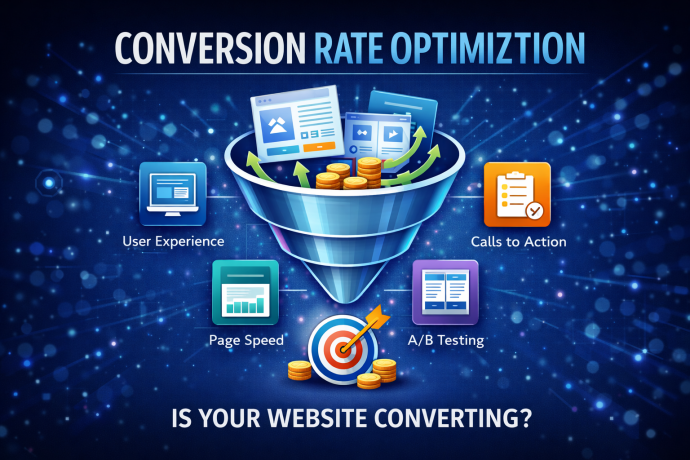
  • Optimize Your Website for User Experience
  • Strengthen Your Calls to Action
  • Improve Page Load Speed
  • Use Data to Guide Decisions
  • Build Trust With Social Proof
  • Simplify Forms and Checkout Processes
  • Test and Refine Continuously
  • Why CRO Delivers Long Term Results
  • Final Thoughts

What Is Conversion Rate Optimization

Conversion rate optimization, often called CRO, focuses on improving the percentage of website visitors who take a desired action. That action may include filling out a form, making a purchase, scheduling a consultation, or signing up for a newsletter.

Instead of spending more money to drive traffic, businesses use CRO techniques to get better results from the traffic they already have. This approach increases efficiency and improves overall marketing return on investment.

Optimize Your Website for User Experience

User experience plays a major role in website conversions. If visitors cannot navigate your site easily, they will leave before taking action.

Start by simplifying navigation. Make sure menus are clear and pages load quickly. Reduce clutter and eliminate unnecessary distractions. A clean layout with strong headlines and clear calls to action helps guide visitors naturally toward conversion.

Mobile optimization is equally important. With most users browsing on smartphones, responsive design ensures your website performs well on every device.

Strengthen Your Calls to Action

Calls to action influence conversion rates more than most businesses realize. Clear, direct language works best. Instead of vague phrases, use action focused wording such as Schedule Your Consultation or Get Your Free Quote.

Placement also matters. Position calls to action above the fold, within content, and at the end of pages. Testing button color, size, and wording can significantly improve click through rates.

Improve Page Load Speed

Website speed directly affects conversion rate optimization. Slow loading pages increase bounce rates and reduce trust.

Optimize images, reduce unnecessary plugins, and use reliable hosting. Even a one second improvement in load time can increase conversions and improve search engine rankings.

Use Data to Guide Decisions

Successful CRO strategies rely on data. Use tools like Google Analytics and heat mapping software to understand how visitors interact with your site.

Identify where users drop off and which pages convert best. A data driven approach removes guesswork and allows you to test changes systematically.

Build Trust With Social Proof

Trust influences purchasing decisions. Adding testimonials, reviews, certifications, and case studies increases credibility.

Place social proof near calls to action to reinforce confidence. When visitors see evidence that others trust your business, they feel more comfortable converting.

Simplify Forms and Checkout Processes

Long or complicated forms discourage conversions. Only ask for essential information. Shorter forms typically generate more leads.

For e commerce websites, streamline the checkout process. Reduce required steps and clearly communicate security measures to build trust.

Test and Refine Continuously

Conversion rate optimization is not a one time project. It requires ongoing testing and refinement.

Run A B tests on headlines, images, layouts, and calls to action. Small changes often lead to measurable improvements over time. Continuous optimization helps businesses stay competitive in evolving markets.

Why CRO Delivers Long Term Results

CRO increases revenue without increasing advertising costs. By improving conversion rates, businesses maximize existing traffic and improve marketing performance.

Instead of chasing more visitors, smart companies focus on converting the audience they already attract.

Final Thoughts

Conversion rate optimization techniques deliver results because they focus on performance, clarity, and user experience. Businesses that invest in CRO create websites that work harder, convert better, and drive measurable growth.
Filed Under: Blogging Tagged With: conversion rate optimization, CRO strategies, digital marketing strategy, lead generation, marketing agency, website conversions

How Social Media Algorithms Impact Your Marketing Results

February 9, 2026

Table of Contents
  • What Is Conversion Rate Optimization
  • Optimize Your Website for User Experience
  • Strengthen Your Calls to Action
  • Improve Page Load Speed
  • Use Data to Guide Decisions
  • Build Trust With Social Proof
  • Simplify Forms and Checkout Processes
  • Test and Refine Continuously
  • Why CRO Delivers Long Term Results
  • Final Thoughts

What Are Social Media Algorithms

Social media algorithms are systems that determine which content users see in their feeds. Platforms like Facebook, Instagram, LinkedIn, and TikTok use algorithms to prioritize content based on relevance, engagement, and user behavior. Instead of showing posts in chronological order, platforms display content they believe users will find most valuable.

Understanding how these algorithms work helps businesses create content that reaches the right audience more consistently.

Why Algorithms Matter for Marketing

Algorithms directly influence how many people see your content. Even with a strong following, posts may reach only a portion of your audience if they do not align with platform preferences. This means marketing success depends not just on what you post, but how and when you post it.

For businesses, algorithm changes can affect brand visibility, engagement rates, and lead generation. Brands that adapt quickly maintain stronger performance over time.

Key Factors That Influence Algorithm Performance

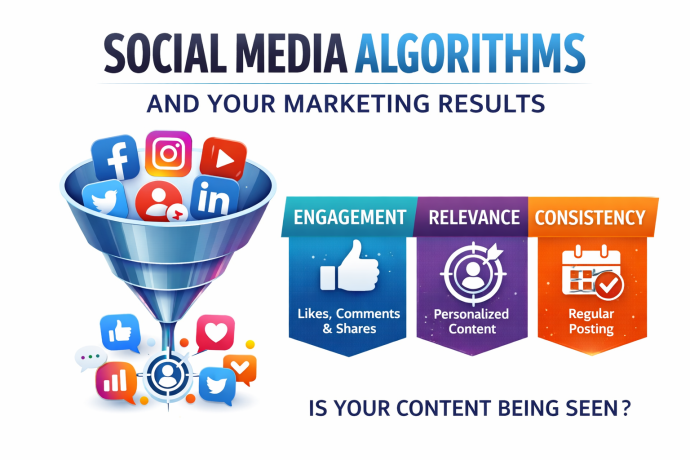
Most social media platforms prioritize similar signals. Engagement plays a major role, including likes, comments, shares, and saves. Content that sparks conversation or keeps users on the platform longer often performs better.

Consistency also matters. Accounts that post regularly and maintain engagement tend to receive more visibility. In addition, platforms favor content formats they want to promote, such as short form video or native features.

Relevance is another major factor. Algorithms analyze user behavior to determine which content matches individual interests. When content aligns with audience intent, reach improves naturally.

How Algorithms Impact Organic Reach

Organic reach has declined across many platforms as competition increases. Algorithms limit visibility to ensure users see high quality, relevant content rather than overwhelming feeds.

This makes it more important for businesses to focus on value driven content instead of promotional messaging. Educational, entertaining, and relatable content typically performs better than direct sales posts.

Adapting Your Marketing Strategy

Successful marketing strategies account for algorithm behavior. Businesses should focus on creating content designed for engagement rather than volume. Posting less frequently but with higher quality often produces better results.

Testing content formats, posting times, and messaging helps identify what resonates. Data from analytics tools provides insights that allow brands to refine their approach and improve performance.

Paid advertising also plays a role. While organic reach is important, paid social campaigns help businesses maintain consistent visibility while supporting algorithm driven strategies.

The Role of Consistency and Quality

Algorithms reward consistency. Brands that maintain a steady presence build familiarity and trust with their audience. High quality visuals, clear messaging, and thoughtful captions increase engagement and visibility.

Quality matters more than ever. Algorithms favor content that keeps users engaged and encourages meaningful interaction.

Long Term Impact on Marketing Results

Understanding algorithms leads to more predictable results. Brands that align content with platform behavior experience improved reach, stronger engagement, and better return on investment.

By staying informed and adaptable, businesses can use social media algorithms to their advantage rather than fighting against them.

Final Thoughts

Social media algorithms shape how content performs. Businesses that understand these systems and adjust strategies accordingly create stronger marketing results and long term growth.

Filed Under: Blogging Tagged With: content visibility, digital marketing strategy, marketing agency, online marketing, social media algorithms, social media marketing

The Role of AI in Marketing Analytics: Turning Data Into Smarter Decisions

February 6, 2026

Table of Contents
  • What Is Conversion Rate Optimization
  • Optimize Your Website for User Experience
  • Strengthen Your Calls to Action
  • Improve Page Load Speed
  • Use Data to Guide Decisions
  • Build Trust With Social Proof
  • Simplify Forms and Checkout Processes
  • Test and Refine Continuously
  • Why CRO Delivers Long Term Results
  • Final Thoughts

Introduction

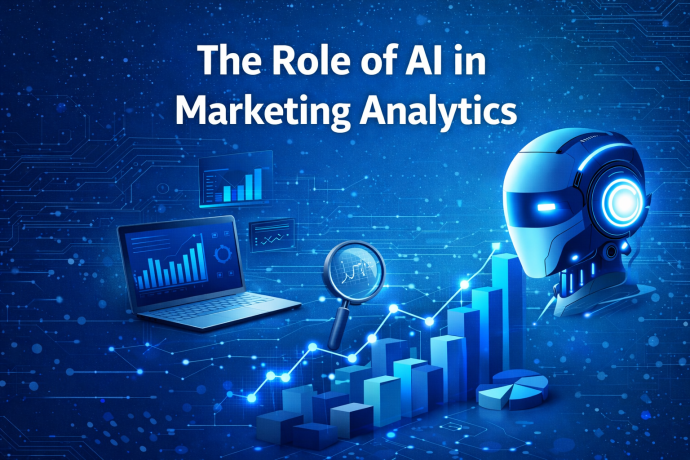
Marketing analytics has always been about understanding data, but the volume and complexity of today’s data make traditional analysis difficult. Businesses now collect information from websites, ads, email campaigns, social media, and CRM systems all at once. Artificial intelligence helps make sense of that data faster and more accurately than manual methods ever could.

AI-powered marketing analytics allows businesses to move beyond basic reporting and into predictive, insight-driven decision making. Instead of reacting to what already happened, companies can anticipate trends, optimize performance, and allocate budgets more effectively.

How AI Enhances Marketing Analytics

AI improves marketing analytics by processing large data sets quickly and identifying patterns humans might miss. Machine learning models analyze customer behavior, campaign performance, and engagement trends in real time.

Rather than relying on static dashboards, marketers gain dynamic insights that update automatically as new data comes in. This approach saves time and reduces guesswork when adjusting campaigns.

Key benefits include:

  • Faster data processing
  • More accurate performance insights
  • Reduced manual reporting
  • Better campaign optimization

Predictive Analytics and Forecasting

One of the biggest advantages of AI in marketing analytics is predictive modeling. AI can forecast customer behavior based on historical data, helping businesses understand what actions users are likely to take next.

For example, predictive analytics can:

  • Identify which leads are most likely to convert
  • Forecast campaign performance before launch
  • Anticipate customer churn
  • Recommend optimal ad spend allocation

These insights allow marketers to plan proactively rather than reacting after results decline.

Personalization Through Data Intelligence

AI-driven analytics also powers personalization. By analyzing user behavior across channels, AI helps marketers tailor messaging, offers, and timing to individual users.

Instead of broad audience segments, businesses can deliver more relevant experiences based on real user data. This leads to higher engagement rates, better conversion performance, and stronger customer relationships.

Personalization supported by AI often improves:

  • Email open and click-through rates
  • Website conversion rates
  • Paid ad performance
  • Customer retention

Real-Time Optimization of Campaigns

Traditional analytics often rely on post-campaign reports. AI changes this by enabling real-time optimization. Algorithms monitor performance continuously and recommend adjustments while campaigns are still running.

This allows marketers to:

  • Pause underperforming ads quickly
  • Shift budget toward high-performing channels
  • Adjust messaging based on audience response
  • Test variations more efficiently

Real-time insights reduce wasted spend and improve overall ROI.

Reducing Bias and Improving Accuracy

Human analysis can introduce bias, especially when interpreting large data sets. AI reduces this risk by evaluating performance based on objective data patterns rather than assumptions.

While AI models still require proper configuration and oversight, they often provide more consistent and reliable insights than manual analysis alone. This helps teams make decisions based on facts rather than instinct.

Challenges to Consider

Despite its advantages, AI-driven marketing analytics is not without challenges. Businesses must ensure data quality, proper integration across platforms, and clear goals before implementing AI tools.

Common challenges include:

  • Poor or incomplete data sources
  • Lack of internal expertise
  • Overreliance on automation without strategy
  • Misinterpreting AI-generated insights

Successful implementation requires a balance between AI technology and human oversight.

The Future of Marketing Analytics With AI

As AI technology continues to evolve, marketing analytics will become more predictive, automated, and integrated. Businesses that adopt AI early gain a competitive advantage by responding faster to market changes and customer behavior.

AI does not replace marketers. Instead, it enhances their ability to analyze data, uncover insights, and execute smarter strategies at scale.

Conclusion

AI plays a critical role in modern marketing analytics by turning raw data into actionable insights. From predictive forecasting to real-time optimization, AI helps businesses understand their audiences and improve performance more efficiently.

Companies that invest in AI-powered analytics position themselves to make better decisions, reduce wasted spend, and stay competitive in a data-driven marketing landscape.

Filed Under: Blogging Tagged With: ai marketing analytics, data-driven marketing, marketing automation, marketing data analysis, predictive analytics

How Nostalgia-Driven Marketing Is Reconnecting Brands and Audiences

January 30, 2026

Table of Contents
  • What Is Conversion Rate Optimization
  • Optimize Your Website for User Experience
  • Strengthen Your Calls to Action
  • Improve Page Load Speed
  • Use Data to Guide Decisions
  • Build Trust With Social Proof
  • Simplify Forms and Checkout Processes
  • Test and Refine Continuously
  • Why CRO Delivers Long Term Results
  • Final Thoughts

Introduction

In a fast-moving digital landscape, consumers often feel overwhelmed by constant change. Nostalgia-driven marketing offers a powerful counterbalance by reconnecting audiences with familiar moments, styles, and emotions from the past.

By referencing shared cultural memories, brands create emotional resonance that cuts through noise and builds trust. Nostalgia does more than entertain. It reconnects people to how a brand makes them feel.

What Nostalgia Marketing Is

Nostalgia-driven marketing uses elements from the past to evoke positive emotional responses. This can include visual styles, music, language, products, or experiences tied to specific eras.

Rather than feeling outdated, effective nostalgia marketing feels comforting and familiar while remaining relevant to modern audiences.

Why Nostalgia Resonates With Consumers

Nostalgia activates emotional memory. When people recall positive moments from earlier periods in their lives, they associate those feelings with the brand delivering the message.

This emotional connection increases:

  • Brand recall
  • Trust and relatability
  • Engagement and sharing
  • Purchase intent

In uncertain times, familiarity offers reassurance.

Nostalgia Across Generations

Nostalgia marketing is not limited to one age group. Different generations respond to different reference points.

Younger audiences engage with nostalgic content tied to childhood or early digital culture. Older audiences respond to retro visuals, classic branding, or revived products. Brands that understand their audience’s reference points create stronger emotional alignment.

Modern Examples of Nostalgia Marketing

Many brands revive older logos, product packaging, or campaign themes. Others reintroduce classic products or remix past advertising styles using modern platforms like social media and streaming content.

The most effective campaigns blend nostalgia with contemporary relevance, ensuring the message feels intentional rather than recycled.

Risks of Nostalgia-Driven Marketing

While nostalgia can strengthen connection, overuse or misalignment can backfire. Brands must avoid appearing out of touch or relying too heavily on the past without offering current value.

Authenticity matters. Nostalgia works best when it aligns naturally with a brand’s identity and audience history.

How Brands Can Use Nostalgia Strategically

Successful nostalgia marketing starts with audience understanding. Brands should identify which memories resonate most and how they connect to current offerings.

Combining nostalgic elements with modern design, messaging, and platforms ensures campaigns feel fresh rather than dated. The goal is emotional connection, not replication.

Why Nostalgia Builds Long-Term Loyalty

Nostalgia creates continuity. When brands reference shared experiences, they reinforce familiarity and trust. Over time, this emotional consistency strengthens loyalty and repeat engagement.

Rather than chasing trends alone, nostalgia-driven marketing anchors brands in meaningful relationships with their audience.

Conclusion

Nostalgia-driven marketing reconnects brands and audiences by tapping into shared memories and emotions. When used thoughtfully, it builds trust, enhances engagement, and strengthens long-term brand loyalty. In an era of constant change, familiarity remains one of the most powerful tools in marketing.

Filed Under: Blogging Tagged With: brand engagement, brand storytelling, consumer psychology, emotional branding, marketing trends, nostalgia marketing

What Is AI Bias?

January 28, 2026

Table of Contents
  • What Is Conversion Rate Optimization
  • Optimize Your Website for User Experience
  • Strengthen Your Calls to Action
  • Improve Page Load Speed
  • Use Data to Guide Decisions
  • Build Trust With Social Proof
  • Simplify Forms and Checkout Processes
  • Test and Refine Continuously
  • Why CRO Delivers Long Term Results
  • Final Thoughts
AI concept with downtown Chicago cityscape skyline with Lake Michigan

Introduction

Artificial intelligence increasingly shapes how businesses make decisions, target customers, and automate operations. From hiring tools and credit assessments to marketing personalization and content moderation, AI systems influence real outcomes. However, AI is not inherently neutral. When bias enters an algorithm, it can lead to unfair, inaccurate, or harmful results.

Understanding AI bias is essential for businesses that rely on data-driven systems. Awareness helps organizations reduce risk, protect brand trust, and deploy AI responsibly.

What AI Bias Means

AI bias occurs when an algorithm produces systematically skewed results that favor or disadvantage certain groups, outcomes, or perspectives. These biases often reflect the data used to train the system rather than intentional discrimination by developers.

Because AI learns patterns from historical data, it can reinforce existing inequalities or assumptions if those patterns remain unchecked.

Common Sources of AI Bias

AI bias typically originates from one or more of the following areas:

  • Biased training data: If data reflects historical inequities, the AI may replicate them
  • Incomplete data: Missing representation leads to inaccurate predictions
  • Human design choices: Developers decide what data to include, label, or prioritize
  • Feedback loops: AI decisions influence future data, amplifying bias over time

Bias does not always appear obvious. In many cases, it emerges gradually as systems scale.

Examples of AI Bias in Practice

AI bias has appeared across industries. Hiring tools have favored certain resumes based on past employee data. Facial recognition systems have shown lower accuracy for certain demographics. Marketing algorithms may disproportionately exclude or over-target specific audiences.

Even recommendation systems can reinforce bias by repeatedly showing similar content, limiting exposure to diverse perspectives.

These examples show why businesses must monitor AI outputs, not just inputs.

Why AI Bias Matters for Businesses

Unchecked AI bias creates serious risks. Beyond ethical concerns, biased systems can expose businesses to legal challenges, reputational damage, and customer distrust.

From a marketing perspective, biased targeting may exclude potential customers or misrepresent brand values. In operational settings, bias can reduce efficiency and decision quality.

Responsible AI use protects both business outcomes and long-term credibility.

How Businesses Can Reduce AI Bias

Eliminating bias entirely is unrealistic, but businesses can reduce its impact through intentional practices:

  • Use diverse and representative datasets
  • Audit AI outputs regularly
  • Combine human oversight with automation
  • Document assumptions and limitations
  • Test systems across varied scenarios

Transparency and accountability play a critical role in responsible AI deployment.

The Role of Human Judgment

AI should support decision-making, not replace it entirely. Human review helps catch context-specific issues that algorithms may miss.

Businesses that treat AI as a tool rather than an authority maintain greater control and flexibility. Balanced systems produce better outcomes than fully automated ones.

Conclusion

AI bias reflects the data and decisions behind the technology. By understanding how bias forms and actively monitoring AI systems, businesses can reduce risk and use artificial intelligence more responsibly. Awareness, oversight, and thoughtful implementation ensure AI supports fairness, accuracy, and trust.

Filed Under: Blogging Tagged With: ai bias, ai in business, algorithmic bias, artificial intelligence ethics, data driven decisions, responsible ai

Advertising Inside AI Assistants: Are Brands Ready for the Shift?

January 26, 2026

Table of Contents
  • What Is Conversion Rate Optimization
  • Optimize Your Website for User Experience
  • Strengthen Your Calls to Action
  • Improve Page Load Speed
  • Use Data to Guide Decisions
  • Build Trust With Social Proof
  • Simplify Forms and Checkout Processes
  • Test and Refine Continuously
  • Why CRO Delivers Long Term Results
  • Final Thoughts
ai advertisements

Introduction

Advertising continues to evolve as technology reshapes how people discover information. The next major shift points toward ads appearing inside AI assistants such as ChatGPT. As millions of users turn to conversational AI for answers, recommendations, and decision support, brands see a new opportunity to reach audiences at moments of high intent.

This change raises an important question for marketers. Are advertisers truly ready to place ads inside AI-driven conversations?

Why AI Assistants Are Attractive to Advertisers

AI assistants differ from traditional platforms because users engage with them purposefully. People ask questions, research solutions, and seek recommendations in real time. This creates intent-rich environments where ads could feel more relevant than disruptive.

For advertisers, AI assistants offer:

  • High-intent user interactions
  • Context-driven recommendations
  • Reduced noise compared to social feeds
  • Opportunities for native, helpful placements

Instead of interrupting content, ads could blend into conversations as suggested solutions.

How Advertising in AI Could Work

Advertising inside AI platforms will likely look different from traditional display or social ads. Rather than banners or sponsored posts, brands may appear as recommended tools, services, or resources within responses.

Potential formats include:

  • Sponsored recommendations
  • Promoted answers or tools
  • Contextual product mentions
  • Lead-generation prompts

Success will depend on relevance. Ads that do not align with user intent will feel intrusive and undermine trust.

The Trust Challenge for Advertisers

Trust sits at the center of AI-driven advertising. Users rely on AI assistants for unbiased, helpful information. If ads feel deceptive or overly promotional, users may disengage or lose confidence in the platform.

Advertisers must prioritize transparency and value. The most effective ads will educate, solve problems, or clearly support the user’s goal. Brands that attempt to force sales-focused messaging risk damaging both performance and credibility.

Targeting and Data Considerations

AI assistants introduce new targeting dynamics. Unlike social media platforms that rely heavily on behavioral data, AI interactions are often intent-based and session-specific.

This shift could benefit advertisers as privacy regulations continue to tighten. Contextual targeting within AI conversations may replace some traditional audience tracking methods.

However, advertisers will need to adapt measurement strategies. Attribution models, conversion tracking, and performance benchmarks may look different in conversational environments.

Are Brands Prepared for This Change?

Many advertisers are not fully prepared. Most marketing teams still build campaigns for feeds, clicks, and impressions. Advertising inside AI requires a mindset shift toward:

  • Conversational messaging
  • Educational content
  • Problem-solution framing
  • Long-term trust building

Brands that already invest in strong content, SEO, and thought leadership will adapt faster than those focused solely on short-term ad performance.

What This Means for Marketing Strategy

The rise of AI advertising reinforces the importance of integrated marketing strategies. Brands should focus on:

  • Clear positioning and value propositions
  • High-quality educational content
  • Strong websites and conversion paths
  • SEO and authority building

AI-driven ads will not replace traditional channels overnight, but they will reward brands that already communicate clearly and authentically.

Preparing for Advertising in AI Platforms

Businesses can prepare now by improving how they communicate value. AI assistants pull from structured, helpful content. Brands that explain their services clearly, answer common questions, and demonstrate expertise position themselves well for future AI placements.

Testing conversational ad copy, refining messaging, and strengthening owned digital assets will help brands stay ahead as AI advertising evolves.

Conclusion

Ads inside AI assistants represent a significant shift in digital advertising. While the opportunity is real, success will depend on relevance, trust, and value-driven messaging. Advertisers who adapt their strategies to fit conversational environments will gain an early advantage, while those clinging to outdated tactics may struggle to connect.

Filed Under: Blogging Tagged With: ai advertising, chatgpt ads, conversational marketing, digital advertising trends, future of advertising, marketing strategy

  • « Go to Previous Page
  • Page 1
  • Page 2
  • Page 3
  • Page 4
  • Interim pages omitted …
  • Page 15
  • Go to Next Page »

Footer

Contact Information


OMA Comp

318 Woodlawn Avenue
Royal Oak, MI 48073-2615

Phone: 248-616-3057
Fax: 248-232-0075

Review Us | Request A Quote

Contact Us

Recent Posts

  • LinkedIn Algorithm Changes for B2B Brands
  • The Power of Video in Healthcare Marketing in Royal Oak
  • What Is Marketing and Why It Matters for Royal Oak Businesses
  • Why Influencer Marketing Is So Important Today
  • Leveraging Short Form Video for Seasonal Promotions

Newsletter Signup

Subscribe below to hear about our latest product offerings and promotions.

Subscribe

Connect With Us

  • Facebook
  • Instagram
  • LinkedIn
  • Twitter
  • YouTube

Copyright © 2026 OMA Comp · Repair Policies · Terms and Conditions · Privacy Policy · Service Ticket

  • Phone: (248) 616-3057
  • Review Us
  • Newsletter Sign Up
Accessibility Adjustments

Powered by OneTap

How long do you want to hide the toolbar?
Hide Toolbar Duration
Select your accessibility profile
Vision Impaired Mode
Enhances website's visuals
Seizure Safe Profile
Clear flashes & reduces color
ADHD Friendly Mode
Focused browsing, distraction-free
Blindness Mode
Reduces distractions, improves focus
Epilepsy Safe Mode
Dims colors and stops blinking
Content Modules
Font Size

Default

Line Height

Default

Color Modules
Orientation Modules