
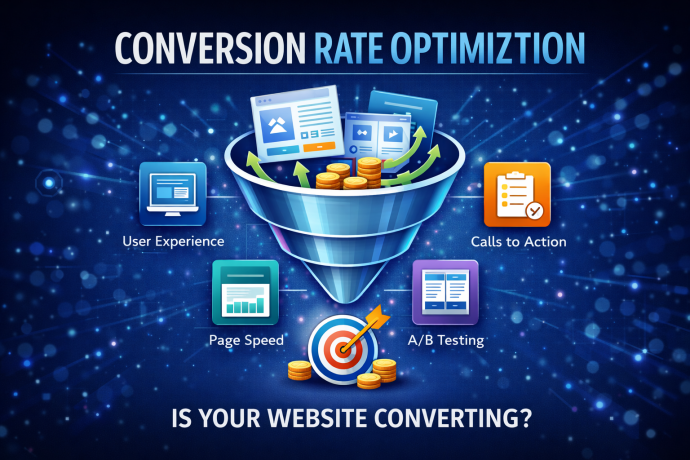
What Is Conversion Rate Optimization
Conversion rate optimization, often called CRO, focuses on improving the percentage of website visitors who take a desired action. That action may include filling out a form, making a purchase, scheduling a consultation, or signing up for a newsletter.
Instead of spending more money to drive traffic, businesses use CRO techniques to get better results from the traffic they already have. This approach increases efficiency and improves overall marketing return on investment.
Optimize Your Website for User Experience
User experience plays a major role in website conversions. If visitors cannot navigate your site easily, they will leave before taking action.
Start by simplifying navigation. Make sure menus are clear and pages load quickly. Reduce clutter and eliminate unnecessary distractions. A clean layout with strong headlines and clear calls to action helps guide visitors naturally toward conversion.
Mobile optimization is equally important. With most users browsing on smartphones, responsive design ensures your website performs well on every device.
Strengthen Your Calls to Action
Calls to action influence conversion rates more than most businesses realize. Clear, direct language works best. Instead of vague phrases, use action focused wording such as Schedule Your Consultation or Get Your Free Quote.
Placement also matters. Position calls to action above the fold, within content, and at the end of pages. Testing button color, size, and wording can significantly improve click through rates.
Improve Page Load Speed
Website speed directly affects conversion rate optimization. Slow loading pages increase bounce rates and reduce trust.
Optimize images, reduce unnecessary plugins, and use reliable hosting. Even a one second improvement in load time can increase conversions and improve search engine rankings.
Use Data to Guide Decisions
Successful CRO strategies rely on data. Use tools like Google Analytics and heat mapping software to understand how visitors interact with your site.
Identify where users drop off and which pages convert best. A data driven approach removes guesswork and allows you to test changes systematically.
Build Trust With Social Proof
Trust influences purchasing decisions. Adding testimonials, reviews, certifications, and case studies increases credibility.
Place social proof near calls to action to reinforce confidence. When visitors see evidence that others trust your business, they feel more comfortable converting.
Simplify Forms and Checkout Processes
Long or complicated forms discourage conversions. Only ask for essential information. Shorter forms typically generate more leads.
For e commerce websites, streamline the checkout process. Reduce required steps and clearly communicate security measures to build trust.
Test and Refine Continuously
Conversion rate optimization is not a one time project. It requires ongoing testing and refinement.
Run A B tests on headlines, images, layouts, and calls to action. Small changes often lead to measurable improvements over time. Continuous optimization helps businesses stay competitive in evolving markets.
Why CRO Delivers Long Term Results
CRO increases revenue without increasing advertising costs. By improving conversion rates, businesses maximize existing traffic and improve marketing performance.
Instead of chasing more visitors, smart companies focus on converting the audience they already attract.
Final Thoughts
Conversion rate optimization techniques deliver results because they focus on performance, clarity, and user experience. Businesses that invest in CRO create websites that work harder, convert better, and drive measurable growth.