
What Are Social Media Algorithms
Social media algorithms are systems that determine which content users see in their feeds. Platforms like Facebook, Instagram, LinkedIn, and TikTok use algorithms to prioritize content based on relevance, engagement, and user behavior. Instead of showing posts in chronological order, platforms display content they believe users will find most valuable.
Understanding how these algorithms work helps businesses create content that reaches the right audience more consistently.
Why Algorithms Matter for Marketing
Algorithms directly influence how many people see your content. Even with a strong following, posts may reach only a portion of your audience if they do not align with platform preferences. This means marketing success depends not just on what you post, but how and when you post it.
For businesses, algorithm changes can affect brand visibility, engagement rates, and lead generation. Brands that adapt quickly maintain stronger performance over time.
Key Factors That Influence Algorithm Performance
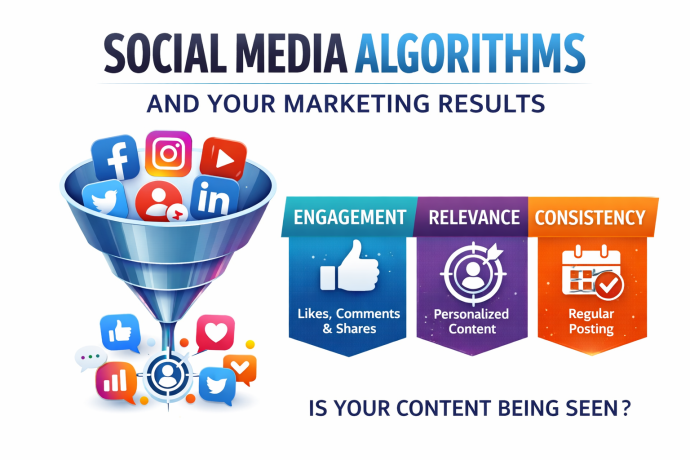
Most social media platforms prioritize similar signals. Engagement plays a major role, including likes, comments, shares, and saves. Content that sparks conversation or keeps users on the platform longer often performs better.
Consistency also matters. Accounts that post regularly and maintain engagement tend to receive more visibility. In addition, platforms favor content formats they want to promote, such as short form video or native features.
Relevance is another major factor. Algorithms analyze user behavior to determine which content matches individual interests. When content aligns with audience intent, reach improves naturally.
How Algorithms Impact Organic Reach
Organic reach has declined across many platforms as competition increases. Algorithms limit visibility to ensure users see high quality, relevant content rather than overwhelming feeds.
This makes it more important for businesses to focus on value driven content instead of promotional messaging. Educational, entertaining, and relatable content typically performs better than direct sales posts.
Adapting Your Marketing Strategy
Successful marketing strategies account for algorithm behavior. Businesses should focus on creating content designed for engagement rather than volume. Posting less frequently but with higher quality often produces better results.
Testing content formats, posting times, and messaging helps identify what resonates. Data from analytics tools provides insights that allow brands to refine their approach and improve performance.
Paid advertising also plays a role. While organic reach is important, paid social campaigns help businesses maintain consistent visibility while supporting algorithm driven strategies.
The Role of Consistency and Quality
Algorithms reward consistency. Brands that maintain a steady presence build familiarity and trust with their audience. High quality visuals, clear messaging, and thoughtful captions increase engagement and visibility.
Quality matters more than ever. Algorithms favor content that keeps users engaged and encourages meaningful interaction.
Long Term Impact on Marketing Results
Understanding algorithms leads to more predictable results. Brands that align content with platform behavior experience improved reach, stronger engagement, and better return on investment.
By staying informed and adaptable, businesses can use social media algorithms to their advantage rather than fighting against them.
Final Thoughts
Social media algorithms shape how content performs. Businesses that understand these systems and adjust strategies accordingly create stronger marketing results and long term growth.